We’re well into autumn now and mushrooms have been springing up in all kinds of places around the Medlock Valley. Fungi can be fickle and quite particular organisms, often requiring very specific habitats. Their presence can thus give us clues about past land use and tell stories about environmental changes over the years.
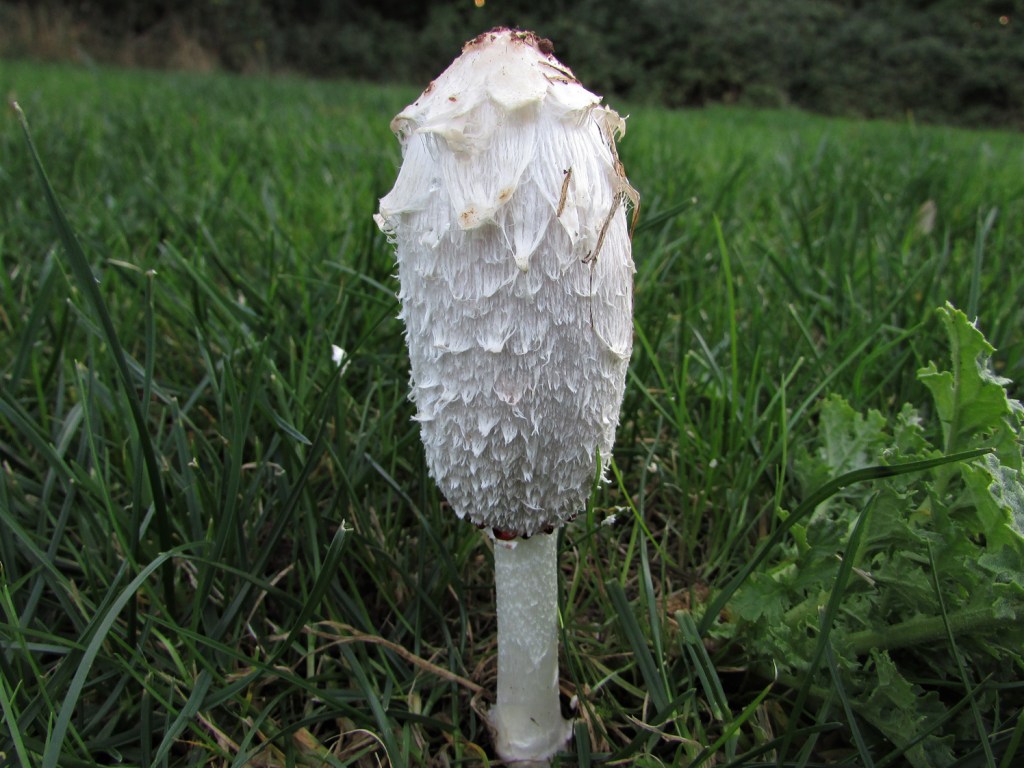
There are the great opportunists, like shaggy inkcaps and fairy ring champignons – both edible (though see warning/caution below) and growing in the field behind the River Pub. These kinds of mushrooms can appear on a well-manicured lawn or golf course, and aren’t very picky when it comes to pollutants or fertilisers. They are often the first to move in when a new patch of grass is established.
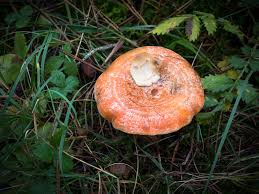
Then there are the species that take much longer to set up shop, usually because they grow with specific trees that themselves can take years to become established. Almost all the most prized mushrooms in Europe – ceps (porcini), chanterelles, truffles – belong to this category (mycorrhizal) and you’ll have to travel to much older habitats, such as our ancient woodlands and hedgerows, to be lucky enough to find these. This morning, however, I was heartened to see one prized species growing with the Scots pine trees off Palmerston Street – the orange-coloured saffron milkcap, which bleeds a green liquid when bruised or damaged (see below). This mushroom is sold in markets in Catalonia and tastes similar to carrots. In England I often find it growing on the edge of coniferous woods. It shows that some of the habitats in the valley are now quite mature and support a diverse range of plants, trees and fungi. Eighty years ago there was a large factory where the milkcaps are now growing.
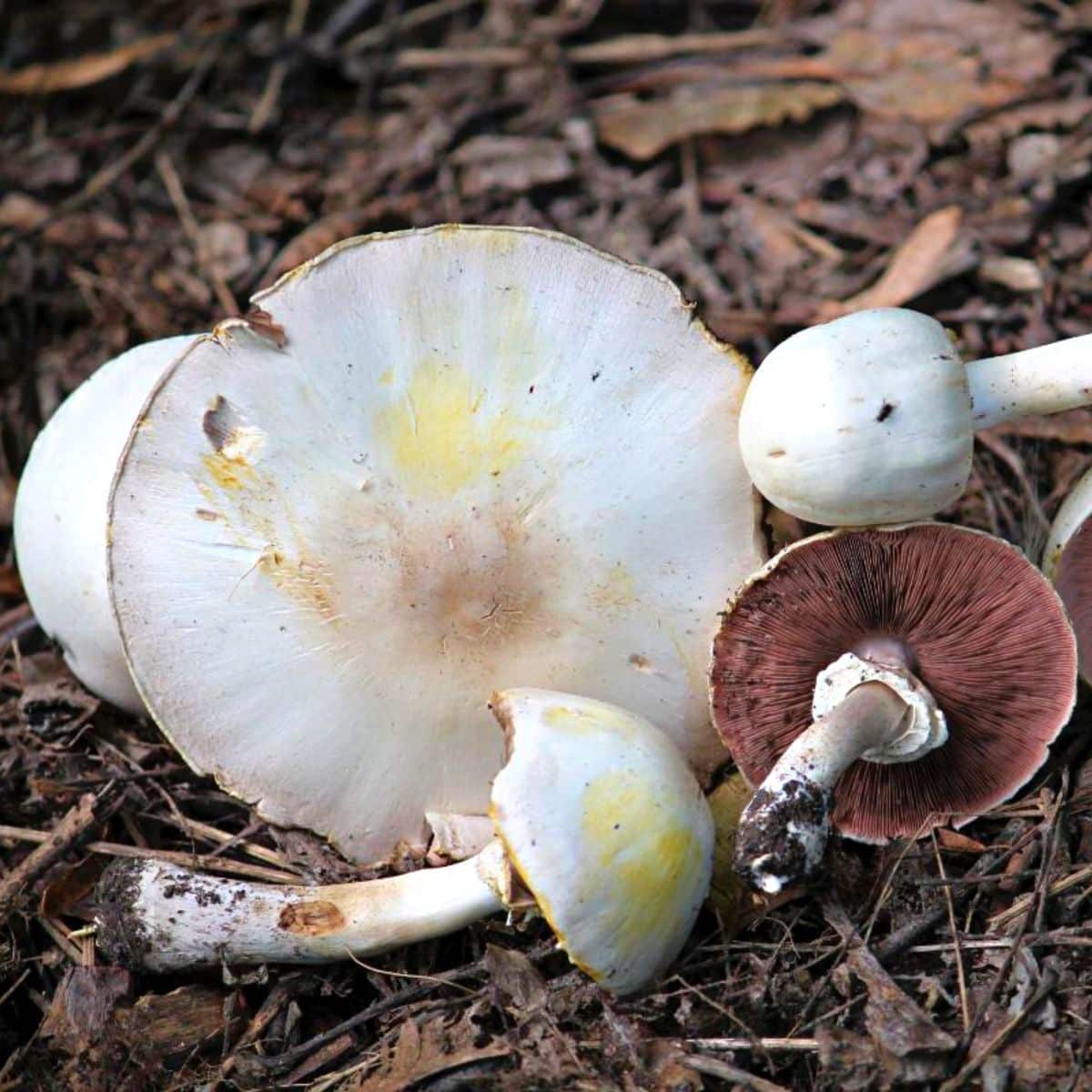
It’s perhaps true that in the UK we are unnecessarily scared of mushrooms (foraging has always been more popular on the continent) but there are several species that you certainly wouldn’t want to ingest. The yellow stainer, which pops up every year in a huge group off Gurney Street, is the mushroom most responsible for poisonings in the UK because it looks almost identical to the common field mushroom, though bruises bright yellow. Still worse are the webcap species, which contain deadly amounts of orellanin. But even as a keen forager myself, sadly I would not pick or eat any mushrooms from the Medlock Valley. This is because more than any other kinds of organism, they readily absorb chemicals and pollutants from the surrounding air and soil, from arsenic to heavy metals, and we simply don’t know what substances lurk under the ground of an ex-industrial site. Once I picked a large number of St George’s mushrooms in April (another choice edible) but they had an odd metallic taste and were quickly consigned to the green bin. This applies less to mushrooms growing directly from rotting wood, such as oyster mushrooms, which I have picked on Lime Kiln Lane before.
So, do go and explore the different kinds of mushroom growing in the valley, but please don’t pick or disturb them, both for your own health and to help these budding habitats establish themselves. Instead, try to identify what’s there and have a think about what it tells us about our not-so-distant industrial past. If you really want to get into foraging for food, head to the countryside and join a guided foray. The Goyt Valley, Mersey green belt and moors and woodlands outside Manchester are great places to start.

 FOMV
FOMV 
Leave a comment